What If Your Child's Story Is Bigger Than You Expected?
Making Room for Who Your Child Is Becoming
June is Pride Month, and for many families, it can bring up conversations that feel both important and unexpected.
For some parents, those conversations begin when a child shares that they are gay, bisexual, transgender, queer, or questioning. For others, those conversations may already be part of daily life.
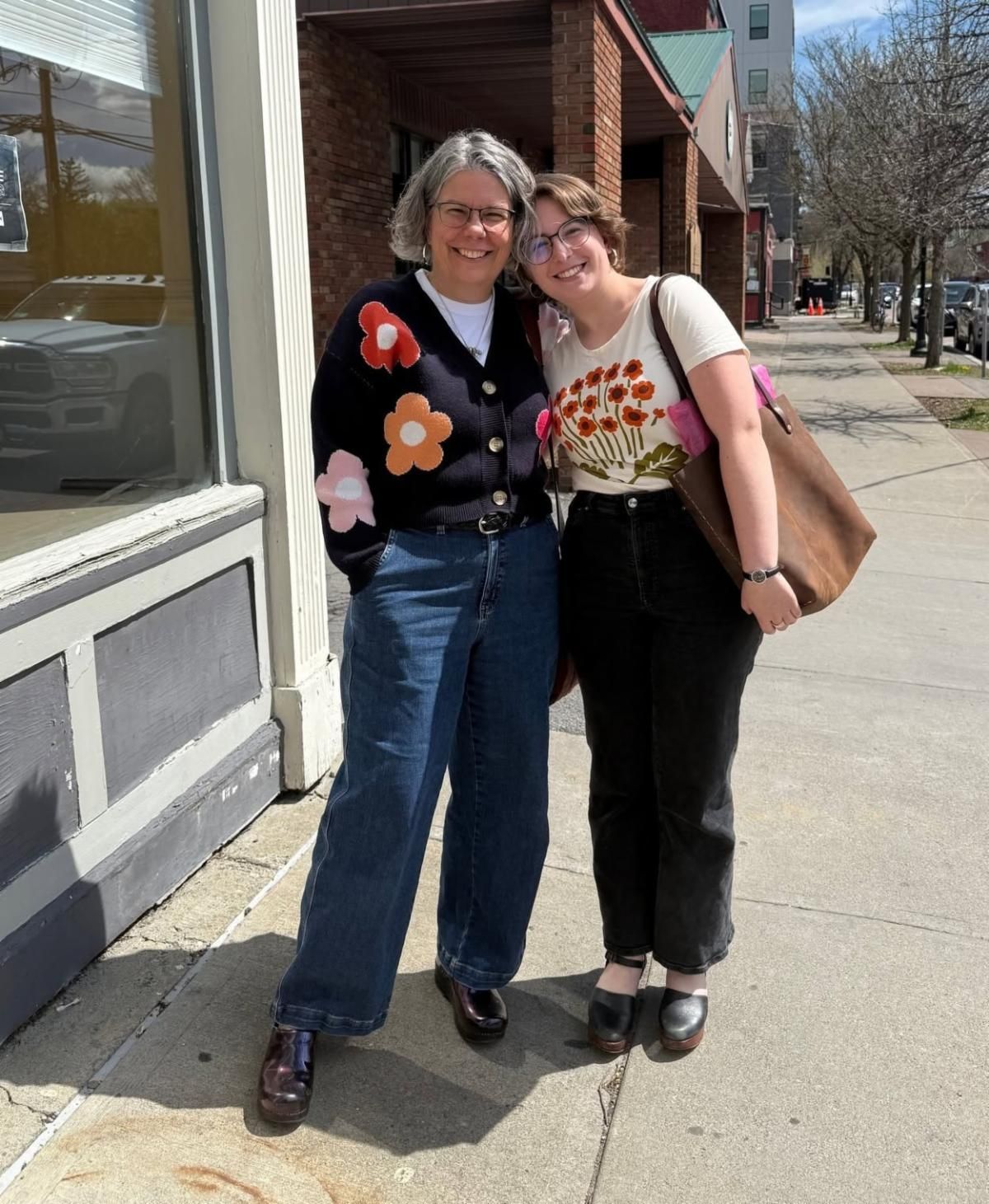
I know they have been part of ours.
There was a time when I thought I had a pretty good sense of who my daughter was and what her future might look like.
Then, during high school, she told us she was bisexual.
At the time, we had no idea she was autistic. We were simply parents trying to understand something that felt new and unexpected.
Like many parents, I worried about saying the wrong thing. I worried about whether she would be accepted. And if I'm honest, I was also adjusting my own assumptions about what her future might look like.
A few years later, while in college, she began identifying as queer.
By then, we had also received her autism diagnosis.
Looking back, I can see that both experiences challenged me in similar ways.
Not because either was a problem to solve.
But because both required me to
let go of the idea that I already knew exactly who my child was.
A Connection Researchers Continue to See
Over the past decade, researchers have consistently found that autistic individuals are more likely than their non-autistic peers to identify as LGBTQ+, including lesbian, gay, bisexual, queer, transgender, nonbinary, or gender-diverse. Studies have also found higher rates of gender diversity among autistic youth and adults.
Researchers are still exploring why this overlap exists. There is no single explanation. Some theories suggest autistic individuals may feel less bound by social expectations or may approach questions of identity differently than their peers. What researchers do agree on is that this pattern appears consistently across studies.
"Why is this happening?"
For parents, the "why" is rarely the most important question.
The more useful question is often:
"How do I stay connected to my child while we're both learning something new?"
I Didn't Need to Understand Everything Immediately
Parents often feel pressure to become experts overnight.
When our children receive an autism diagnosis, we start researching therapies, educational supports, accommodations, and resources. When they share something important about their identity, many of us feel that same pressure all over again.
But understanding is often a process, not an event. You don't need to have every answer on day one.
Curiosity Protects Connection
One of the greatest gifts we can offer our children is genuine curiosity.
Not interrogation. Not panic. Not immediate problem-solving.
Curiosity sounds like:
"Tell me more."
"How long have you been thinking about this?"
"What would be helpful for me to understand?"
Those questions create space for conversation instead of defensiveness.
Relationship Matters More Than Perfect Language
Many parents worry about saying the wrong thing.
The reality is that most of us will make mistakes at some point.
What matters most is whether our children know we are trying.
In my experience, children and young adults are usually far more interested in feeling heard, respected, and loved than they are in whether their parents use every term perfectly the first time.
A Reminder for Parents
One thing autism has taught me is that parenting often requires us to release expectations we didn't even realize we were holding.
Most of us begin parenthood carrying a picture of what the future might look like. We imagine friendships, school experiences, career paths, relationships, and independence. We build stories in our minds about how life will unfold.
Then our children grow, and life has a way of introducing possibilities we never anticipated.
That doesn't mean something has gone wrong.
It means our children are becoming who they are.
My daughter's autism diagnosis changed how I understood many parts of her life. Her journey of first identifying as bisexual in high school and later identifying as queer in college reminded me of something equally important:
my job was never to decide who she would become.
My job was to stay connected while she figured it out.
If you're navigating conversations about sexuality, gender identity, or any other aspect of your child's self-discovery, know this: you do not have all the answers today. You do not have to get everything right.
What matters most is that your child knows they can keep coming to you.
Lead with curiosity. Keep listening. Trust that your relationship can be strong enough to hold questions, uncertainty, growth, and discovery.
Sometimes the greatest gift we can offer our children is the freedom to become themselves while knowing they are deeply loved along the way.
Author's Note: My daughter gave me permission to share the parts of her story included in this newsletter. I am grateful for her willingness to help other parents and families feel less alone.
Further Reading
George, R., & Stokes, M. A. (2018). Sexual Orientation in Autism Spectrum Disorder. Autism Research, 11(1), 133-141.
Cooper, K., Smith, L. G. E., & Russell, A. (2018). Gender Identity in Autistic Adults: Relationships with Sex, Sexual Orientation, and Autistic Traits. Autism, 22(8), 970-982.
Strang, J. F., van der Miesen, A. I. R., Caplan, R., Hughes, C., DaVanport, S., & Lai, M. C. (2020). Both Sex- and Gender-Related Factors Should Be Considered in Autism Research and Clinical Practice. Autism, 24(3), 539-543.