Nope, That's Not Autism — You Just Like Quiet
Why "we're all a little autistic" misses the mark and why it matters
You’ve probably heard someone say, “We’re all a little autistic.” Maybe they meant it as a way to connect or show empathy, but that phrase isn’t just inaccurate, it’s dismissive. Autism is not a personality trait or a quirky preference.
It’s a neurodevelopmental difference that affects how someone experiences the world. Saying “we’re all a little autistic” not only spreads misinformation, it also minimizes the real challenges autistic people face every day.
Let’s break down why this phrase misses the mark.
1. Autism isn't a personality quirk.
It’s a neurodevelopmental condition with real, impactful differences in communication, sensory processing, executive functioning, and social interaction.
Just liking routines or getting overwhelmed sometimes doesn’t mean you're
autistic.
2. It erases lived experiences.
Saying this flattens the experiences of autistic people who deal with misunderstanding, discrimination, and challenges that non-autistic folks don’t face, even if they also dislike crowds or need quiet time.
3. It spreads misinformation.
Autism is diagnosed based on a specific set of criteria. You can’t be “a little” autistic any more than you can be “a little” pregnant. Either your brain is wired that way, or it isn’t.
4. It centers non-autistic feelings.
This phrase often comes up when someone is trying to relate, but it shifts attention away from autistic people and their actual needs, especially when support or accommodations are being discussed.
What to say instead:
✅ “I can relate to that in some ways, but I know it’s different for autistic people.”
✅ “I’m learning more about how autism actually shows up. It’s much more than just needing structure.”
✅ “I want to be supportive without assuming I fully understand.”
So, next time you hear someone say, “We’re all a little autistic,” take it as an invitation to shift the conversation. Real understanding starts with recognizing the difference between a shared feeling and a lived experience. The more we listen, learn, and speak up, the better we can support our kids and show the autistic community the respect they deserve. Let’s keep learning together.
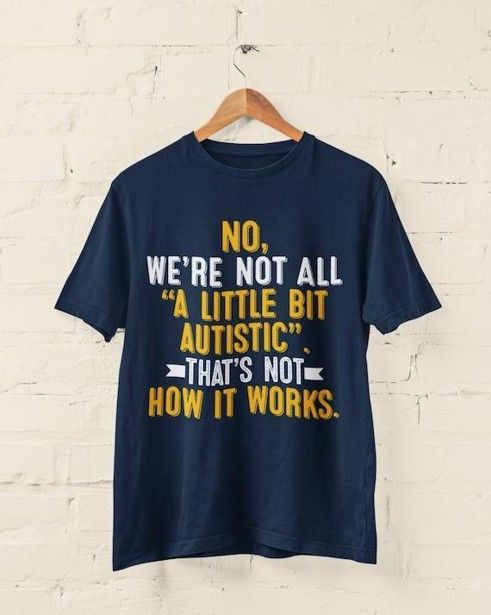
Image source: Etsy